

High Drama
Autonomous Vehicles: Part 2
This is the second blog on Autonomous vehicles, for the introduction and first part please see Autonomous Vehicles Part 1 .
Autonomous vehicles- the major potential ‘cons’:
Connectivity:
The sine qua non for the CAV (connected autonomous vehicle) is communications. It is at the same time its strength and, borrowing from Greek mythology, its Achille’s heal. To function, autonomous vehicles must rely on a tremendous amount of inter and intra connectivity. All of the on-board sensors (lidar, radar and cameras, engine parameters, lane departure, etc.) have to flawlessly communicate with one another, as well as vehicle to vehicle, and communicate with traffic management (lights, flow, emergency vehicles, etc.).
Sounds great in theory, but in actuality this is astoundingly difficult to pull off. Keep in mind, this connectivity has to function flawlessly all of the time. There was a bit of irony at CES 2017 in that every presentation I attended experienced a problem at least once with the remote presentation control unit communicating correctly with the media controller equipment. And this was connectivity at its very basic level! On a more complex level, there was Faraday’s problem during the press review where their car failed to accept the command to self-park.
Obviously, you can’t have a break in connectivity or the autonomous vehicle will come to a complete (unintended) halt (hopefully), and in doing so will become a potential accident instigator for both other autonomous and non-autonomous vehicles. What level of redundancy will be sufficient to prevent a loss of connectivity? While it seems feasible that intra- vehicle (between its numerous components necessary to have an autonomous system) redundancy is reasonably surmountable, what will be necessary to ensure the inter-vehicle, and traffic management, along with live web connectivity, is flawless?
Simultaneously with ensuring the continuous flow of connectivity, there are still two large problems to solve: All communication has to be hack proof (we have seen the videos of someone remotely gaining access to a vehicle’s electronics via one of the communication channels, and taking over one or more of the vehicles systems- acceleration, braking, steering. Hackers have demonstrated this remotely on cars ranging from Jeeps to Teslas.). Further a great deal, if not all, of the information has to maintain the privacy of the vehicle (and its occupants).
Additionally, complicating the connectivity issue is what was tagged “Babel” at the CES 2017 A United Language for the Connected Car session. The general definition of babel is a confused noise, typically made by a number of voices. Unfortunately, it applies to the current status of proprietary software designed for many of the components needed for a connected vehicle. The herculean challenge is to get a universal open language used across all components/systems for autonomous vehicles. Beyond the current Babel-of-software-language is the growing quagmire of state and federal regulations aimed at controlling autonomous vehicle access to our roads. Currently, an autonomous vehicle approved by nascent laws in one state, may not be able to continue driving when it crosses into an adjacent state. For example, while an autonomous car can be driven in Nevada, it can’t legally continue into nearby Oregon or Idaho, and if you are in an autonomous car in Florida, you could not continue on into any of its adjoining states.
Societal Impact:
The RAND Corporation pointed out in their 2016 publication Autonomous Vehicle Technology: A Guide for Policymakers, that rather than autonomous vehicles reducing congestion on our roads, they may, in fact, increase congestion. This conclusion is based on the reduced transportation costs borne by individuals. For example, the cost of automotive insurance shifts from the owner to that of the manufacturer of autonomous vehicles. This, combined with increased access (potentially no need for individual driver licenses), could see a substantial surge in the number of individuals travelling at the same time. Of course, it could be moderated by increased reliance on mass vs low occupancy vehicles. The elimination of the hassle often associated with finding a parking space (your autonomous vehicle could drop you off and then continue on to a remote parking area, awaiting your request for it to comeback and pick you up) may also contribute to a significant increase in willingness to ‘hop’ into your vehicle and head to a dense, high-use, urban area.
What are the implications for the potential loss of transportation sector jobs, their respective incomes and loss of tax revenues from reduced or eliminated parking garages, meters, etc.?
And while most believe that autonomous vehicles (or even semi-autonomous) will significantly reduce the number of deaths caused by crashes, the is one part of our society that has depended on these deaths- that of organ donations. “It’s morbid, but the truth is that due to limitations on who can contribute transplants, among the most reliable sources for healthy organs and tissues are the more than 35,000 people killed each year on American roads (a number that, after years of falling mortality rates, has recently been trending upward). Currently, 1 in 5 organ donations comes from the victim of a vehicular accident.” [From Future Tense: The Citizen’s Guide To The Future. Dec. 30 2016] The potential impact is catastrophic on an already stretched organ donation system. “All of this has led to a widening gap between the number of patients on the organ wait list and the number of people who actually receive transplants. More than 123,000 people in the U.S. are currently in need of an organ, and 18 people die each day waiting, according to the Department of Health & Human Services. Though the wait list has grown each year for the past two decades, the number of transplants per year has held steady in the last decade, at around 28,000.”[ Fortune: If driverless cars save lives, where will we get organs? By Erin Griffith Aug 15, 2014].
Moral Dilemma:
You may be familiar with the paradox of Buridan’s ass. As the story goes, a hungry donkey was placed equidistant between two identical bales of hay. Unable to choose which one to go to, the donkey died of starvation. The movement towards autonomous vehicles has at least two analogous conundrums: how many deaths by autonomous vehicles is an acceptable number of deaths, and, who is going to have the final approval of the algorithms designed to make a decision for an autonomous vehicle as to who should be sacrificed when a choice has to be made between certain death in a pending accident. The analogy is that if we can’t reach agreement on both of these issues, the movement towards autonomous vehicles may come to a halt.
Even though these two conundrums are inextricably related, let me briefly explore each separately. We know factually that autonomous vehicles can lower deaths currently associated with driver error, and that the number won’t rapidly be reduced to zero. Using the approximately 32,000 automotive related deaths per year (cited in my Part 1), what percent reduction would be ‘acceptable’? Would a 50% reduction resulting in 16,000 fewer deaths per year, but also 16,000 remaining deaths per year by autonomous vehicles be OK? Would it take a 75% reduction resulting in 8,000 deaths per year by autonomous vehicles to be considered OK? The consensus appears to be that while the astounding number of 32,000 deaths per year caused by human error behind the wheel, isn’t good, we seem to have ‘accepted’ it without demanding immediate action on a national or global level. However, few believe we would be as complacent if the news was filled with 16,000 or even 8,000 deaths per year as a result of autonomous vehicles.
Recently a number of articles have appeared highlighting the other conundrum: algorithms being designed to decide who lives and who dies when the outcome of a pending accident is unavoidable. For example: “A self-driving car carrying a family of four on a rural two-lane highway spots a bouncing ball ahead. As the vehicle approaches a child runs out to retrieve the ball. Should the car risk its passengers’ lives by swerving to the side—where the edge of the road meets a steep cliff? Or should the car continue on its path, ensuring its passengers’ safety at the child’s expense?” [Driverless Cars Will Face Moral Dilemmas by Larry Greenemeier, June 23, 2016, Scientific American] Or:” Imagine you’re behind the wheel when your brakes fail. As you speed toward a crowded crosswalk, you’re confronted with an impossible choice: veer right and mow down a large group of elderly people or veer left into a woman pushing a stroller.” [Driverless cars create moral dilemma. By Matt O’Brien, The Associated Press January18, 2017]. Who should be entrusted with developing and ultimately approving the necessary algorithms? Shall there be one algorithm for all autonomous vehicles globally or will there have to be country/culturally specific versions?
Real World Impediments To Fully Autonomous Vehicles:
At this point, autonomous vehicle developers have not been able to handle several frequent occurrences typical to our driving environments. If a fully autonomous car comes upon road construction, it doesn’t know how to ignore the programming that tells it not to cross a double yellow line, or purposely drive into a temporary lane without lane markers. It is basically programmed to shut down- or, in Nissan’s case, phone ‘home.’ At CES 2017, Carlos Ghosn, Chairman and CEO of Nissan, during his keynote speech said they are planning on having a centralized station staffed 24/7, to handle “edge” circumstances for their autonomous cars. In logic, the human contacted by the autonomous car would review the information available from the on-board sensors, and map an alternative route or action. It is unclear how would this approach be able to scale up instantaneously, for example, when a large section of a country has an extreme disrupter such as flooding, earthquake, etc.?
Similarly, autonomous vehicles cannot negotiate a dirt road, or a road that lacks up-to-date gps mapping. Neal Boudette in his article “5 Things That Give Self-Driving Cars Headaches” points out, autonomous cars will have a very hard time with unpredictable reckless drivers on the same road in a non-connected vehicle [New York Times, June 4, 2016].
Current thinking of many developers, is to require a (human) driver to serve as ‘back-up’ in those circumstances where the autonomous or semi-autonomous vehicle encounters a situation it isn’t programmed to handle. Unfortunately, there are severe limitations to how well most drivers would be able cope with such an unexpected/instantaneous hand-off (one doesn’t have to look any further than the tremendous increase in accidents attributable to drivers distracted by texting). The biggest problem is with a lack of sufficient reaction time even at moderate speeds, let alone highway speeds. This is further complicated by the well documented fact of vigilance decrement. The longer the autonomous vehicle is properly handling the driving, the less attentiveness and readiness the ‘back-up’ human will have to properly respond to the hand-off.
In order to succeed, there is going to have to be a significant educational effort of the current, and potential, driving public during the transition period when autonomous and semi-autonomous vehicles share the road with traditional non-connected vehicles. Part of this education will need to focus on the trust issue confounded by demographic and age differences in acceptance.
In some ways, many of the concerns today are parallel to those around one of the earliest autonomous vehicles designed to transport people- the elevator. Original elevators were relatively dangerous vertical transport platforms, operated by a trained elevator operator. As safety concerns were addressed, elevators vastly improved including having doors, fixed stopping points, redundant mechanisms to prevent free fall, etc. Shortly after the turn of the twentieth century push buttons were introduced that would permit selecting a specific floor and the elevator to proceed automatically to that floor. However, it wasn’t until after World War II -forty years after automation- that elevator operators were no longer placed in most elevators. One of the main reasons for the slow transition from manually operated to fully automated elevators was people were fearful of getting into an elevator that did not have a human operator. How likely are you to entrust your life to the newest mode of autonomous vehicles?
Autonomous Vehicles Part 3 will explore: What is next? Is the light at the end of the tunnel daylight or an oncoming train?
CES 2017 Autonomous Vehicles: Part 1
Autonomous Vehicles: Part 1
Probably the best way to start is to use CES’ clever one word campaign that defines CES 2017: Whoa!
Having spent 5+ days trying to take it all in, and by all I mean over 3,800 exhibiting companies, across several Las Vegas resort locations and the LV Convention Center, and is the largest event of its kind, I have to agree Whoa! best describes it.
If you are not familiar with CES, it used to be known as the Consumer Electronics Show, and now is called CES: the global consumer electronics and consumer technology trade show. While the new official name isn’t as ‘catchy’ as the original one, it is more accurate. Exhibitors and buyers from 150 plus countries attend, network, and place orders for this year’s hottest tech.
Additionally, it serves as a platform for the top experts in related fields and industries to come to share ideas and learn from one another. While it is not open to the public, it has a massive attendance- over 175,000 this year, along with a large media presence to get the word out.
CES 2017 covered a broad range of technology and its impact on:
- Aging and accessibility
- Cyber security
- Drones (from micro to those capable of carrying an individual)
- Enhanced audio and video
- Gaming, VR and AR (virtual and augmented reality)
- Health, fitness and wearables
- The Connected world
- Sustainable and Eco-friendly tech
- Vehicle technology
- Startups
- Family and lifestyle
- Content and entertainment
- Robotics
The focus of this blog is one slice of CES 2017 which, in my opinion, will ultimately impact virtually everyone- that of Autonomous Vehicles. From my perspective, it truly reflects the synthesis and status of the technology found across most of the areas in the bullet list above.
Introduction: Just what is an autonomous vehicle?
Is it a car that can drive down the road by itself like a Tesla, or one that can park itself like a Toyota, or brake itself to avoid collision like a Cadillac, or is it reserved for something more like depicted in the 1960s series the Jetsons?

Courtesy of Newsday 
At CES 2017 there were numerous autonomous vehicles in all shapes and sizes.
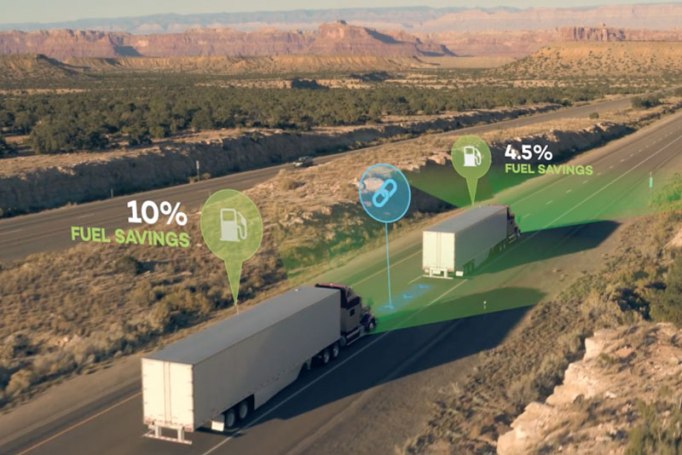
And there were even semi-autonomous trucks demonstrating platooning technology, where they are able to travel in a caravan fashion saving fuel and driver effort.
SAE has developed the most broadly accepted definition of the levels of driving automation. As seen on the accompanying chart, they have described five levels ranging from ‘no automation’ through ‘full automation.’ Most important is the transition role (responsibilities) between the human and the ‘system.’ The biggest shift is between levels 2 and 3, where the responsibility for monitoring the driving environment shifts from the person to the system. The role of the human becomes one of back-up to the automated driving system. Of course, this shift in responsibility is one of the thorniest and most complex components of the process.

Autonomous vehicles– the major potential ‘pros’:
Among the top reasons to move towards automation level 3, 4 or ultimately 5, include anticipated significant reductions in vehicular deaths; reduction in congestion; reduction in pollution; facilitated transport of individuals unable to or who should not be driving (too old, infirm, disabled, too young, under medically induced or other impairment).
For example, there are approximately 32,000 automotive related deaths per year. NHTSA has estimated that between 90 and 94% of those are due to human error. Further, the economic cost is c. $242 billion and societal harm c $836 billion. Automated drive systems, whether as low as SAE level 2 on upwards to 5, is expected to significantly reduce deaths due to human error. Most agree it is reasonable to expect automation to quickly reduce the automotive related deaths easily by half or more.
Damien Riehl (a technology lawyer with a background in legal software design) summed up the critical advantages of the ‘hand-off’ from human to machine: “Computers do not share human drivers’ foibles: They cannot be inebriated, they don’t text, and they don’t fall asleep. Automated-driving systems can also have super-human qualities: 360–degree vision; 100 percent alert time; constant communication with the road, traffic lights, and other cars; “sight” through fog and darkness; and universal, system-wide routing for traffic-flow optimization. Computers react faster: Humans’ reaction time is approximately 1.5 seconds, while computers’ reaction times are measured in milliseconds (and, per Moore’s Law, improving exponentially). [ from the Bench & Bar of Minnesota, the official publication of the Minnesota State Bar Association; Riehl Oct. 4, 2016]
Another significant advantage of moving towards autonomous vehicles comes from the necessary connectivity in each vehicle. Autonomous vehicles will need to be able to ‘communicate’ with other vehicles on the same road, the environmental variables such as traffic lights, weather, flow, etc. This critical inter-connectivity will enable aggregated, and most cases, instantaneous learning by the vehicle’s system. Much like we see today in applications such as WAZE and LIVE, where we as drivers hear of traffic issues, police actions, etc. in near real time, and they can choose to act upon such information, that is learn from it, or ignore it. But of course, the difference is that autonomous vehicles will be programmed with algorithms to instantaneously incorporate the new information and take appropriate corrective actions. For example, if an autonomous vehicle is driving along a road where there is a traffic accident or construction, it would send the information to other autonomous vehicles further back on the same route, resulting in a seamless rerouting. This built in collective and incremental learning will mean that the more the autonomous vehicles drive, the more of them on the road with vehicle-to-vehicle and vehicle-to-environs instant and continuous connections, the more efficient and expeditious each will become.
Potential applications abound (many you probably have heard about) including driverless pick up via Uber/Lyft; calling your own car to pick you up and drop you off; driverless public transportation like Olli; platooning of freight hauling trucks, etc. Autonomous vehicles also open up new modes of transportation, such as the hyperloop. For example, Hyperloop One is being built north of Las Vegas, Nevada as a proof of concept. Here in their own words is an explanation: “The Hyperloop is a new way to move people or things anywhere in the world quickly, safely, efficiently, on-demand and with minimal impact to the environment. The system accelerates a passenger or cargo vehicle through a steel tube in a near-vacuum using that linear electric motor. The autonomous vehicles glide comfortably at faster-than-airline speeds over long distances due to the extremely low aerodynamic drag and non-contact levitation. There’s no direct emissions, noise, delay, weather concerns nor pilot error. “[By Bruce Upbin, VP Strategic Communications, Hyperloop One]. Ultimately the vision for hyperloop is to have direct connections (non-stop) between cities, with hubs where either you could drive your car or take an autonomous car to the hub. At the hub you would drive onto an autonomous platform, be in a small grouping of platforms going to the same location, and be sent out within minutes of your driving onto the platform to your destination, non-stop, at speeds of up to 700+ miles per hour. At your destination, you would leave the hub and drive or be driven to your objective.
Autonomous vehicles logically could also result in lack of need for personal car (or multiple car) ownership, personal automobile insurance, significant reduction in the need for parking garages in cities, decreased pollution, and increased personal time.
But is it all rosy?
In my Part 2, I will explore Autonomous vehicles- the major potential ‘cons’ https://insight.daumphotography.com/2017/01/25/autonomous-vehicles-part-2/
For a sample of my photographs from CES 2017 please see http://www.daumphotography.com/Events/2017-CES/

Fabulous flowers
Flowers are found almost everywhere. Typically they add color, and often fragrance, that help them standout in our visual landscapes.
Frequently we just ‘breeze’ by them as we pass from here to there, and as a result miss the stunning nuances they are waiting to share.
Here is a sampling from my travels around the world:
Hope you enjoy! Please feel free to share your thoughts.
Highlights of St. Petersburg, Russia
My travels have provided me the opportunity to experience more than 60 amazing countries and cultures. A friend recently challenged me to try and provide a visual summary of one of my trips in a five minute or less ‘tour.’ [I am not sure but think the motivation was so they did not have to sit through one of my Blu-ray shows, that often run about an hour or so production…]
At any rate, I thought it an interesting challenge, and this is my first response.
This is an overview tour of highlights from St. Petersburg, Russia. As you come in from the sea, you past the Lenin era massive housing projects. While these buildings are showing their age, there is new construction of equally massive housing going up nearby. The city is comprised of stunning buildings lining the streets along the Neva River central waterway. Next stop is the ornate Cathedral of Peter and Paul. On from there to the opera house for Swan Lake. Next is Catherine’s palace followed by the State Hermitage Museum. This magnificent museum has your head swiveling in an attempt to take it all in- the magnificent palace easy ‘competes’ with its rooms that house amazing art works. Hope you enjoy! (It may take a couple of seconds for the slideshow to load)
Please feel free to comment. I may even be encouraged and do more ‘mini’ tours!
The beauty of sunsets…
Sunsets tend to have a transformational power.
Not only do they bring a fleeting, but dramatic change to the natural beauty of the land, sea and air, but they have the ability to provide an image to the mind’s eye that often takes your breath away.
Whether the less frequently seen ‘green flash’ as in these images
Or the spectacular sunsets seen around the world. [Slideshow below might take a few seconds to load]
Always worth watching and appreciating- much like stopping to enjoy the fragrance of a rose. Unique, temporary and often uplifting.
Cars as moving sculptures
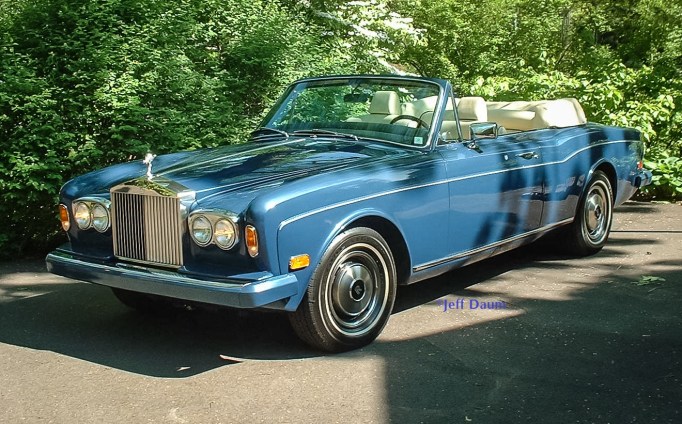
As automotive enthusiast (yup, in case you haven’t guessed it I fall into that category), we tend to go far beyond thinking of cars as simply a ‘means to get from A to B.’ Since the start of car production, designers got involved right alongside engineers in an attempt to differentiate one model from another, to blend ‘art and science,’ and in many cases, to result in cars seen as moving sculptures.
There are many variations in attempts to come up with THE list of top designers. Admittedly there shouldn’t be just one list as beauty is ultimately in the eyes of the beholder. One of the lists I like as a jump off point is Chris Perkin’s (of Jalopnik) “The Ten Greatest Car Designers Of All Time.” His list includes Ian Callum (Aston Martin DB9, Jaguar F), Paul Bracq (Mercedes, BMW), Bill Mitchell (GM, Sting Ray), Georges Paulin (Peugeots), Franco Scaglione (Alfa Remero Tipo 33 Stradale), Harley Earl (GM Buick Y, Corvette), Batista Pininfarina (Alfa Romeo Giulietta Spider), Malcom Sayer (Jaguar C & XJ13), Marcello Gandini (Miura,Countach), Giorgetto Giugiaro (Ferrari 250, Berlinetta Bertone).
Of course, I anticipate many recent design greats like Ed Welburn (Corvette Stingray C7), Peter Brock (Sting Ray Racer, Cobra Daytona Coupe), and Grant Larson (Porsche Boxster) will find their way onto updated variations of the top designer lists.
As you (hopefully) are thinking about who would be on your list, prompted by the names here and/or images, please comment at the bottom and share your input! Thanks.
Figuratively capturing an animal
Capturing the essence of an animal in their natural habitat is a unique and time sensitive challenge. You typically don’t have control over the lighting, the conditions and certainly, rarely the animal itself. More than not the opportunity is a chance encounter.
Oh but the results can be so satisfying.

With a bit of luck (and imagination) you get to soar

Observe a Mother teaching her son the art of hunting

a Father and son playing

A rare black rhino foraging

An odd ‘couple’ out for a stroll

Mother and child (look under her) enjoying the day

Sharing an intimate moment
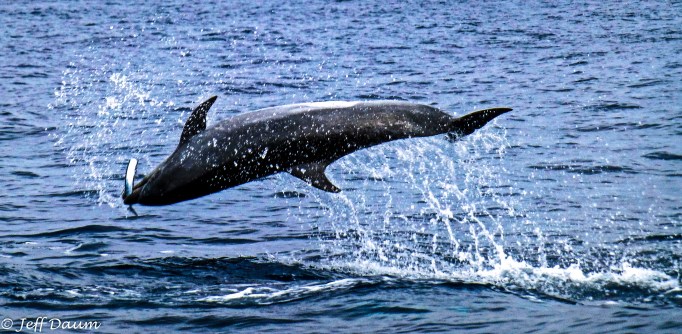
Capturing lunch on the go

Providing lunch on the go

The pause that refreshes
Image vs equipment and software
When I started in professional photography my equipment consisted of Nikon Fs (F, F3, Photomic, etc.).
Here is a comparison of my first professional camera in the center, with my first digital with a Leica lens on the right, and my latest digital Nikon on the left.
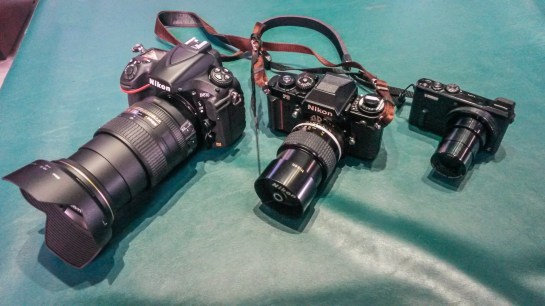
Evolution (or Nikon on steroids).
I tend to add new equipment when I feel the technology offers a significant improvement. For example, the small Leica was my initial move into the world of digital. It was considerably smaller than my film cameras, and offered the ability to immediately confirm I captured what I wanted. It also allowed me to learn how to shoot in digital since, in my experience, it required somewhat different skills than film cameras. Framing and composition were still the same, but how digital captured light has subtle but important differences to my eye as compared to film. [ Much like digital audio equipment sounds different when compared to tube based equipment. ]
While I still occasionally shoot with negative professional film using my older Nikon equipment, nearly all of my images today are shot with my full frame Nikon digital cameras.
From my earliest days as a photographer, my approach was to capture what interested me just exactly as I saw it in my ‘mind’s eye,’ so to speak.
Initially all of my work was done on black and white professional negative film, that I developed in my lab. Developing of film was done by the ‘book’ without enhancing the image. Slowly I experimented with color negative film but my concern was that it was too easy to get an interesting picture simply because of the colors as compared to black and white. For example, this shot of spices from India is really only interesting to me because of the colors as compared to shooting it in black and white.
This approach still reflects my technique today, except I normally only shoot with an eye to the colors and how they interact with the composition.
And certainly, many images rely totally on color for dramatic impact:
I trust my ability to see and capture what I want without coming back and spending time using readily available software (today’s equivalent of chemicals in the lab and development times when I started) to modify the image. I don’t think there is anything wrong enhancing images using post shooting software, but believe it reflects more of a philosophical difference. I consider myself a ‘naturalist’ photographer verses an artist/photographer producing a final photograph with software.